Why Great Leadership Development Starts With Business Friction
Too much leadership development begins with programmes. The most effective capability strategies start somewhere else entirely — with the friction slowing the business down.
If I joined an organisation tomorrow as Head of Leadership Development, the first thing I would not do is launch a new programme.
I wouldn’t start by redesigning competency frameworks.
I wouldn’t immediately commission workshops.
And I definitely wouldn’t begin by asking:
What training should we run?
Instead, I’d start somewhere far more useful.
I’d try to understand the friction inside the business.
Because the best leadership development strategies rarely begin with content.
They begin with problems the organisation is struggling to solve.
Most Leadership Development Starts Too Late
One of the biggest issues in Learning & Development is that capability conversations often begin after someone has already decided the solution is training.
A senior leader says:
- “Our managers need feedback training.”
- “We need more accountability.”
- “Communication needs improving.”
- “We need a leadership programme.”
And sometimes those things are true.
But experienced L&D professionals and business consultants know the request itself is rarely the full picture.
Because behaviour inside organisations is shaped by systems, culture, leadership norms, workload, incentives, organisational pressure and competing priorities.
Which means capability gaps are often symptoms of something larger.
Start With the Business Strategy
Before designing any learning intervention, I would first want to understand:
- Where the organisation is trying to go
- What the business strategy requires from leaders
- Which behaviours accelerate progress
- Which behaviours are slowing things down
Because leadership development should not exist separately from organisational performance. It should support it directly.
For example — if a business needs faster decision-making, leadership capability may need to focus on clarity, accountability, confidence and communication under pressure.
If innovation is struggling, the issue may not be creativity training. It may be low psychological safety preventing people from speaking honestly.
If collaboration is weak, the problem may not be teamwork skills. It may be competing incentives between departments.
Without understanding the business context, development easily becomes disconnected activity.
Capability Gaps Are Not Always Skill Gaps
One of the most useful questions in L&D is:
Can people not do this — or are conditions making it difficult?
There’s a big difference.
A manager may appear poor at delegation. But after deeper conversation, the real issue may be unclear accountability, fear of mistakes, excessive workload, lack of trust, or conflicting leadership expectations.
In those situations, another workshop alone rarely solves the problem.
This is where consultative L&D becomes important. Because effective development requires diagnosis, not just delivery.
Too Much L&D Starts With Content
Many organisations unintentionally approach Learning & Development backwards. The conversation starts with programmes, workshops, platforms and content libraries.
But capability strategy should begin with business friction. Questions such as:
- Where are decisions slowing down?
- Where are teams struggling to collaborate?
- Which leadership behaviours are creating tension?
- What conversations are not happening?
- What cultural norms are rewarded in practice?
- Where is performance currently constrained?
These are far more valuable starting points. Because leadership development should solve organisational problems — not create additional activity.
Culture Always Shapes Capability
One reason leadership development sometimes struggles to create lasting impact is because culture quietly overrides learning.
An organisation might say it values collaboration, feedback, innovation and accountability. But what gets rewarded in practice?
If leaders are promoted for individual heroics rather than teamwork, collaboration training will struggle. If people are punished for mistakes, innovation workshops will have limited impact. If psychological safety is low, feedback frameworks will not suddenly create openness.
Culture shapes behaviour far more than PowerPoint slides do. That’s why leadership development and organisational development are so closely connected.
Leadership Behaviour Is the Real Lever
The most effective organisations understand that leadership behaviour creates ripple effects across the system.
Leaders influence communication norms, decision-making quality, psychological safety, trust, accountability, collaboration and adaptability.
Which means small behavioural shifts can create disproportionately large organisational impact.
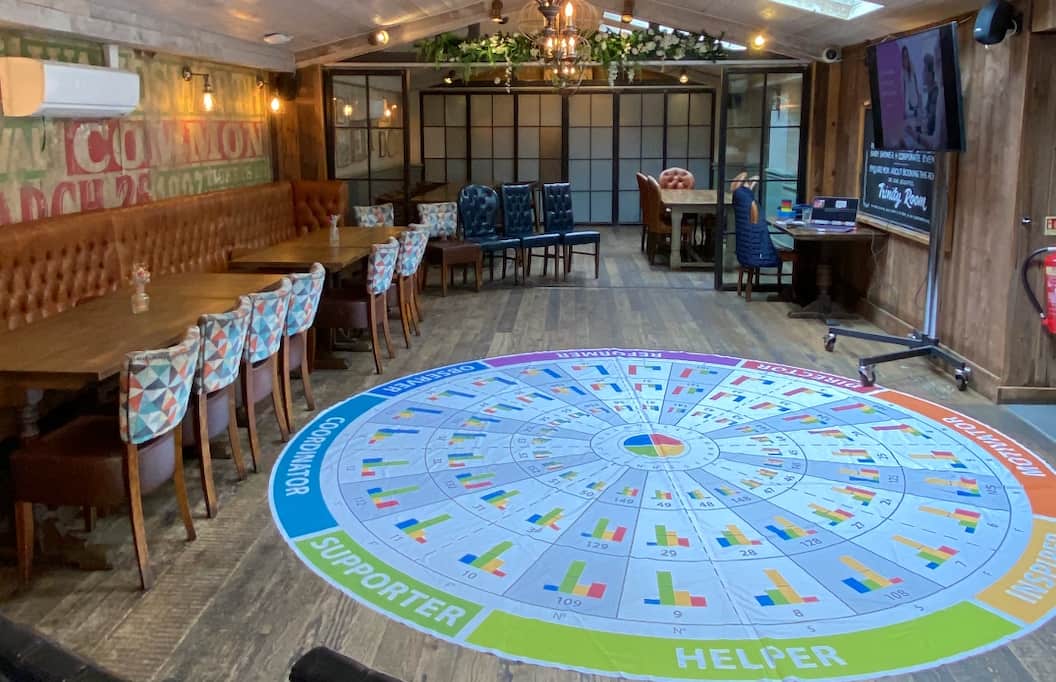
This is why tools such as Insights Discovery can be valuable within leadership development — not because personality models magically solve business problems, but because self-awareness helps leaders understand how they communicate, how others experience them, what happens under pressure, and where behavioural friction may appear.
That awareness creates the conditions for more intentional leadership. And intentional leadership shapes culture.
The Best Capability Strategies Feel Commercial
One of the biggest shifts L&D still needs to make is this: stop defining impact by what was delivered, and start defining impact by what changed.
The strongest leadership development functions are not simply training providers. They operate as performance partners. They understand the business strategy, operational friction, organisational culture, leadership dynamics and behavioural blockers — and they design development around those realities.
That changes the conversation significantly. Because suddenly the focus becomes business outcomes, behavioural change and organisational effectiveness — not attendance numbers or workshop satisfaction scores.
Final Thought
Leadership development is most valuable when it helps organisations solve real problems. That means the starting question is rarely “What training should we run?”, it’s “What business outcomes are currently being constrained by leadership capability, culture or systems?”
That shift matters. Because organisations rarely struggle from lack of learning activity. They struggle from lack of aligned behaviour. And the best capability strategies begin by understanding exactly where that friction exists.
Continue Reading
Want to explore this topic for your organisation?
Most conversations start by simply talking about what's happening in your team.
Book a call