Leading Teams
Creating the conditions for collective performance.
A group of talented individuals doesn't automatically become a high-performing team. Leading Teams focuses on the shared understanding, communication and trust that allows teams to do their best work together.
What Gets in the Way
Teams contain a mix of personalities, working styles and priorities.
Without a shared understanding of those differences, friction appears. Not because people are difficult — but because they're different.
Leading Teams creates the shared language and mutual understanding that turns those differences into a strength rather than a source of tension.
Why do some conversations always seem to go in circles?
Often because people are optimising for different things — and don't know it.
Why does this person always seem so difficult?
Usually because their communication style is opposite to yours — not because they're trying to be.
Why won't people just say what they think?
Psychological safety — or the absence of it — shapes what people are willing to say out loud.
Workshops
What we can work on together.
Communication and Alignment
Decision Making
Selling and Service
Building High Performing Teams
Collaborative Problem-Solving
Encouraging Innovation
Teams Through Change
Building Resilient Teams
Creating a Continuous Improvement Culture
Managing Conflict Constructively
Who This Is For
Teams at any stage.
Newly formed teams
Establishing shared ways of working from the outset.
Teams in conflict
Rebuilding trust and communication after a difficult period.
High-performing teams
Going further by understanding what makes them work.
Teams through change
Navigating restructure, new leadership or shifting priorities.
Ready to work on your team?
Tell me what's happening and we'll explore what kind of support would help most.
Book a callFormats.
Shaped around what the team needs and how much time you have.
Half day
Three to four hours. A focused session on one or two issues the team is currently living with.
Full day
Around six hours with breaks. Room for the harder conversations rather than just naming them.
Programme
Three to six sessions across a few months, so behaviour has time to change between them.
Virtual
Split into shorter sessions rather than one long day on screen. Video is harder work than a room.
Group size is 6 to 20. Sessions run UK-wide and I travel to you.
Senior Leadership Team
Chelmsford College.
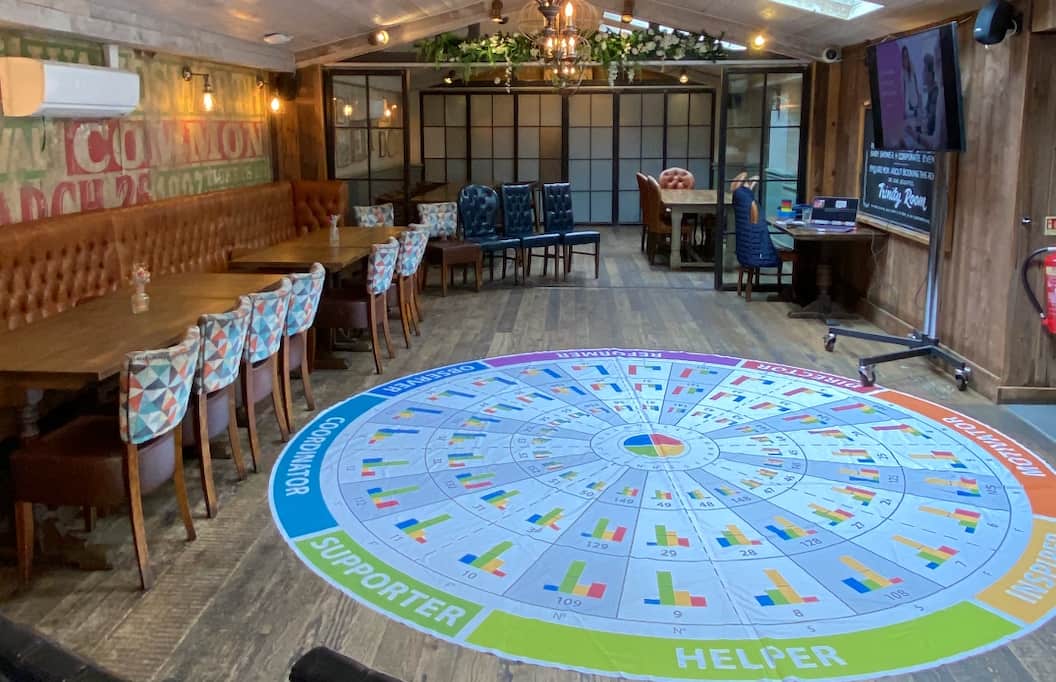
After a restructure the senior leadership team was 50% new members, a mix of promoted staff and new appointments. They needed a structured way to accelerate how quickly the team could understand one another's communication styles and build a shared language from the outset.
“Matthew has a natural affinity to ensure the team get the most out of their Insights profile and helps us to understand the inter-connectivity between team members. His approach is thoughtful and considered but delivered in a relaxed and entertaining way.”
Senior Leader, Chelmsford College
The team reported clearer communication and more productive meetings, with greater awareness of when they needed more structure, pace, or space for reflection. The programme is being extended to the governing body.
Who delivers it.
Every session is delivered by Matthew Cook, a licensed Insights Discovery practitioner, consultant, facilitator and coach.
Not a trainer working from someone else's deck. The person you speak to first is the person in the room on the day.
More about Matthew →FAQs
Frequently asked questions.
A workshop is a session. This is a programme. The workshop gives everyone profiles and a shared language in a day; team development is the work of actually changing how the team operates, usually across several sessions. Most teams start with a workshop and extend if it is landing.
Typically three to six sessions across a few months. Long enough for people to try things between sessions and come back with what happened, which is where the change actually occurs.
Each session ends with specific commitments rather than general intentions. The next one opens by revisiting them. That gap is the point: nothing changes inside a training room, it changes in the meetings that follow it.
Yes, and most teams do. Start with a workshop, see whether it lands with this particular group, then decide. I would rather you extended because it is working than committed upfront to something you are unsure about.
Most team training measures whether people enjoyed it. What matters is whether behaviour changed and whether the team noticed. Because a programme runs across months, you can actually track that: what people committed to, whether they did it, and what is different by the end. Worth designing in before the first session if you need to evidence it for a board.
Between 6 and 20 for a working session. Above twenty it stops being a conversation. If your team is larger, we would usually split it and run the same programme twice.
Always, and with a programme there is room to adjust as we go. What we plan for session four often changes based on what comes out of session two.
Often yes, and more so than a single session. A workshop can name what is happening; changing it takes longer than one afternoon. Worth a conversation first so I understand what we are walking into before anyone books anything.
It usually does. New starters can be profiled and brought in, and a changing team is often the reason the programme was needed in the first place.
When a team is newly formed or has changed significantly, when communication or conflict has become a recurring issue, when the team is going through change, or when a team that already works well wants to go further.
This is about the team operating well as a group. Leading Others is about leading the individuals within it, one at a time. Managers often need both, usually Leading Others first.